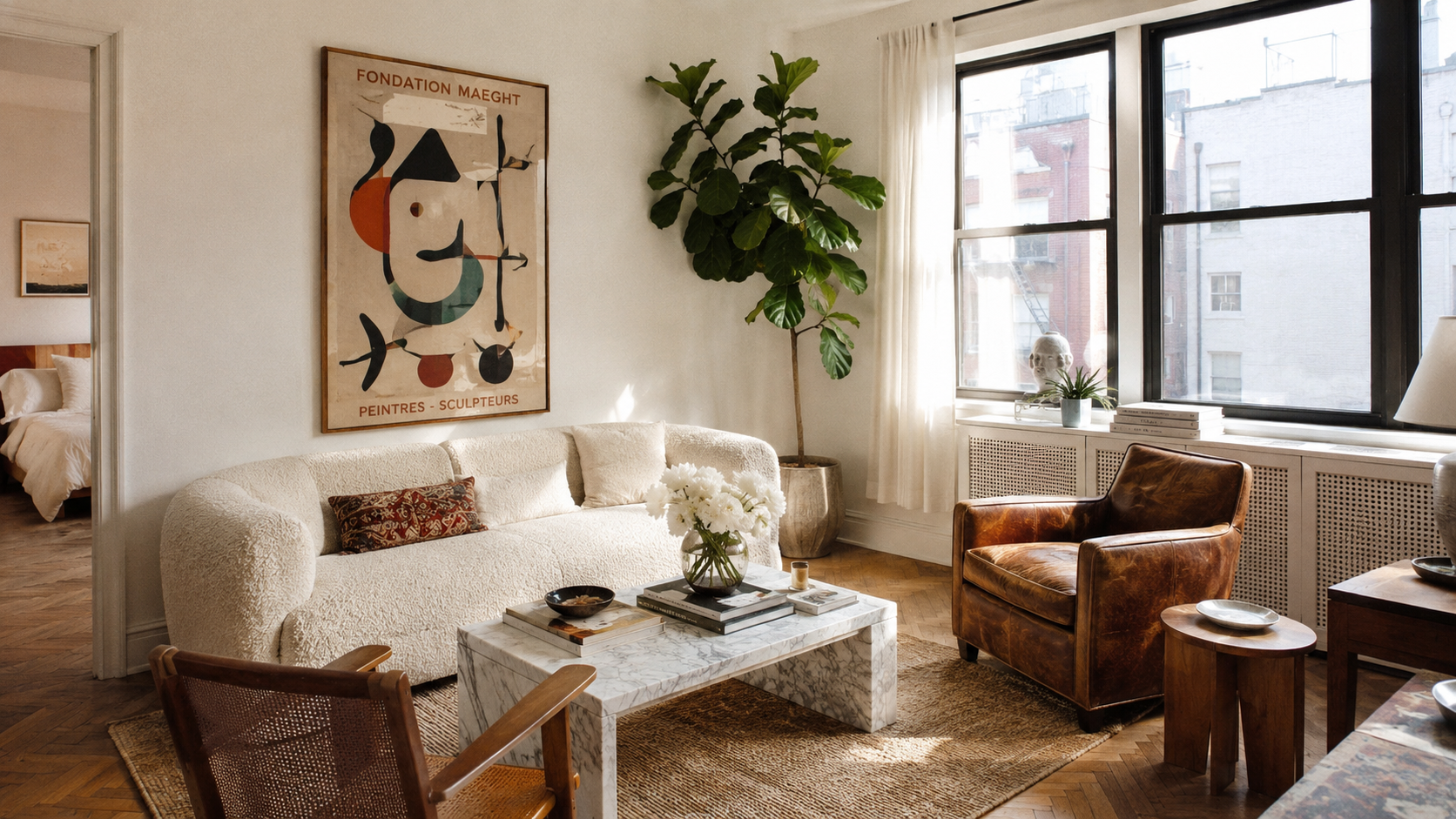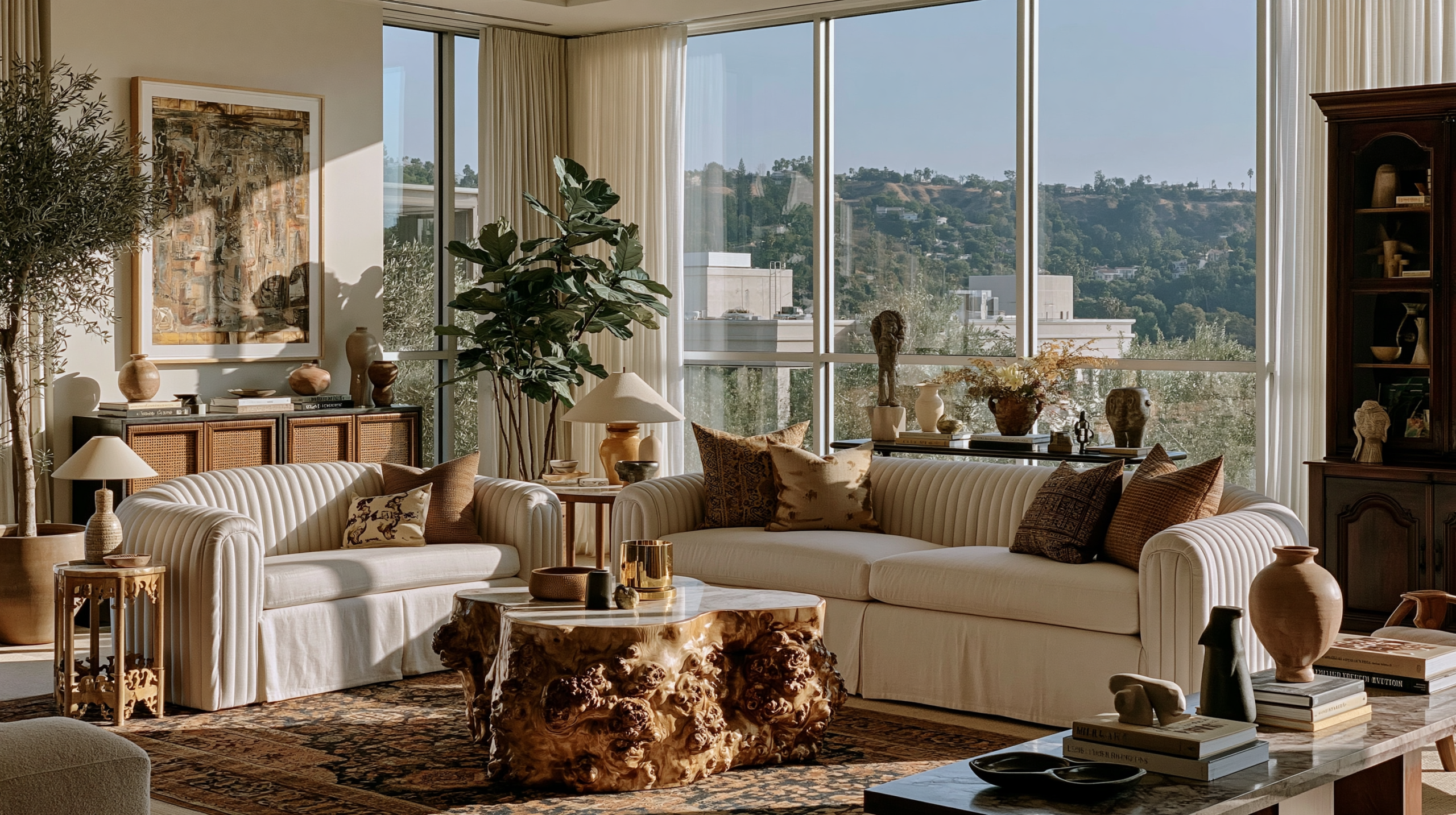
Most living rooms fail for the same reasons. The rug is too small. The lighting is wrong. There's no art, or there's too much of it. The sofa is fine but everything around it is an afterthought. The room photographs okay and feels like nothing.
Getting a living room right isn't about spending more. It's about sequencing — knowing which decisions matter most and making them with intention. There are five. Do these five things well and the rest takes care of itself.
The Rug — Bigger Than You Think
The rug is the foundation of the room. Everything sits on it, everything relates to it, and if it's wrong, nothing else can save you. The most common mistake is buying one too small — a rug that floats in the centre of the room with all the furniture legs hovering off its edges.
The rule is simple: all front legs on the rug at minimum. Ideally all four legs of every piece. When in doubt, go one size up from what feels comfortable when you're measuring. A larger rug that fills the room reads as considered. A small rug reads as an afterthought.
On texture: choose something with character. A Moroccan Beni Ourain, a faded vintage kilim, a flat-weave with a subtle pattern. The rug should have enough presence to anchor everything above it without competing with it.
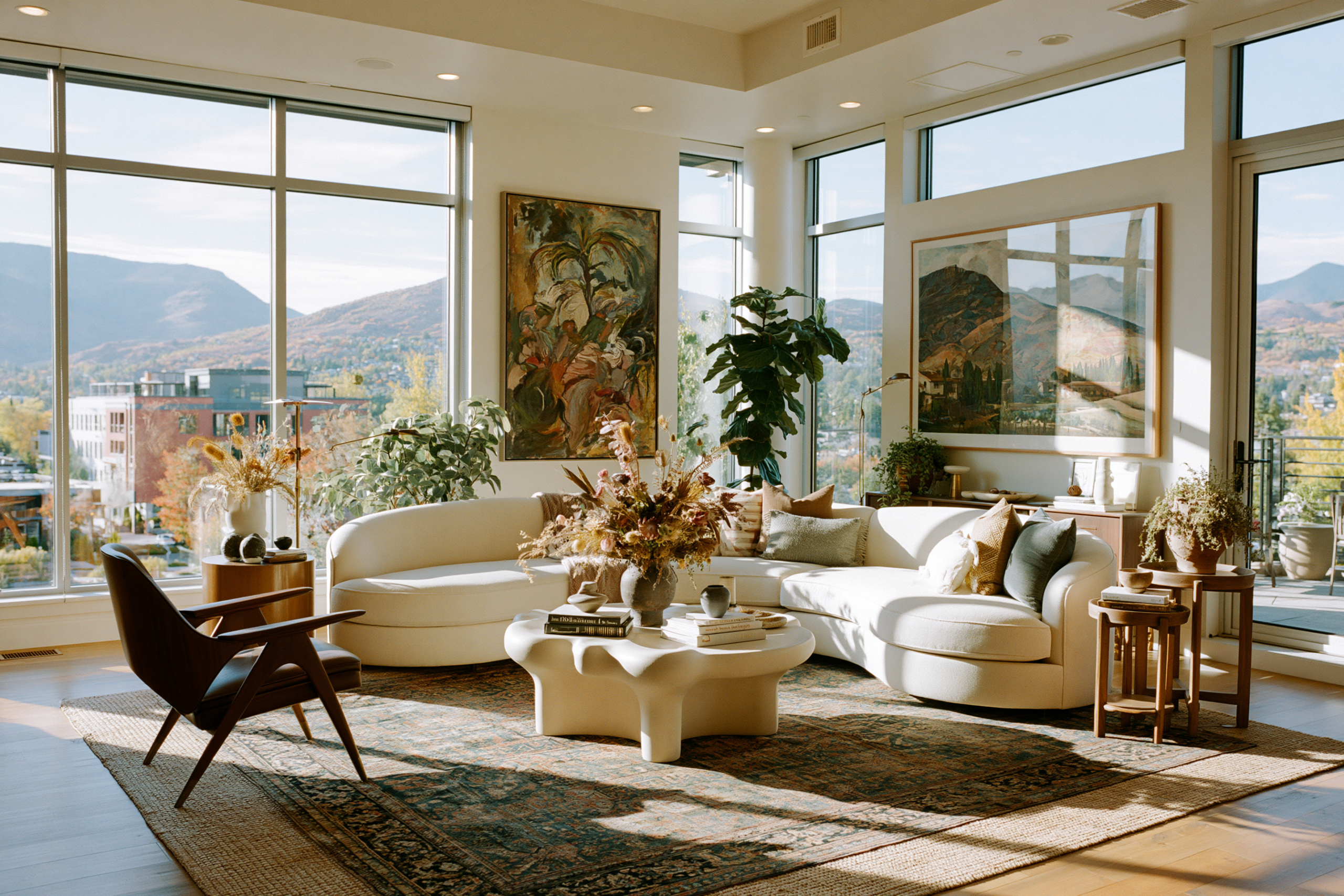
All legs on. The rug sets the boundary of the room — everything within it belongs together.
The Lighting — Turn Off the Overhead
The overhead light is the enemy of atmosphere. It flattens everything, drains warmth from every surface, and makes even a beautiful room feel like a waiting area. The first thing to do in any living room is stop using it — or at minimum, put it on a dimmer and use it only when you need to find something on the floor.
Replace it functionally with layers. A floor lamp that casts a warm pool of light in one corner. A table lamp on the sideboard or side table. A wall sconce if you can manage it. The goal is multiple light sources at different heights, each one creating its own moment in the room.
The lamp itself matters as much as the light it produces. A sculptural brass floor lamp, a ceramic base with a linen shade, a Bestlite replica done well — these are objects as much as they are light sources. Choose shapes that would hold the room's attention even switched off.
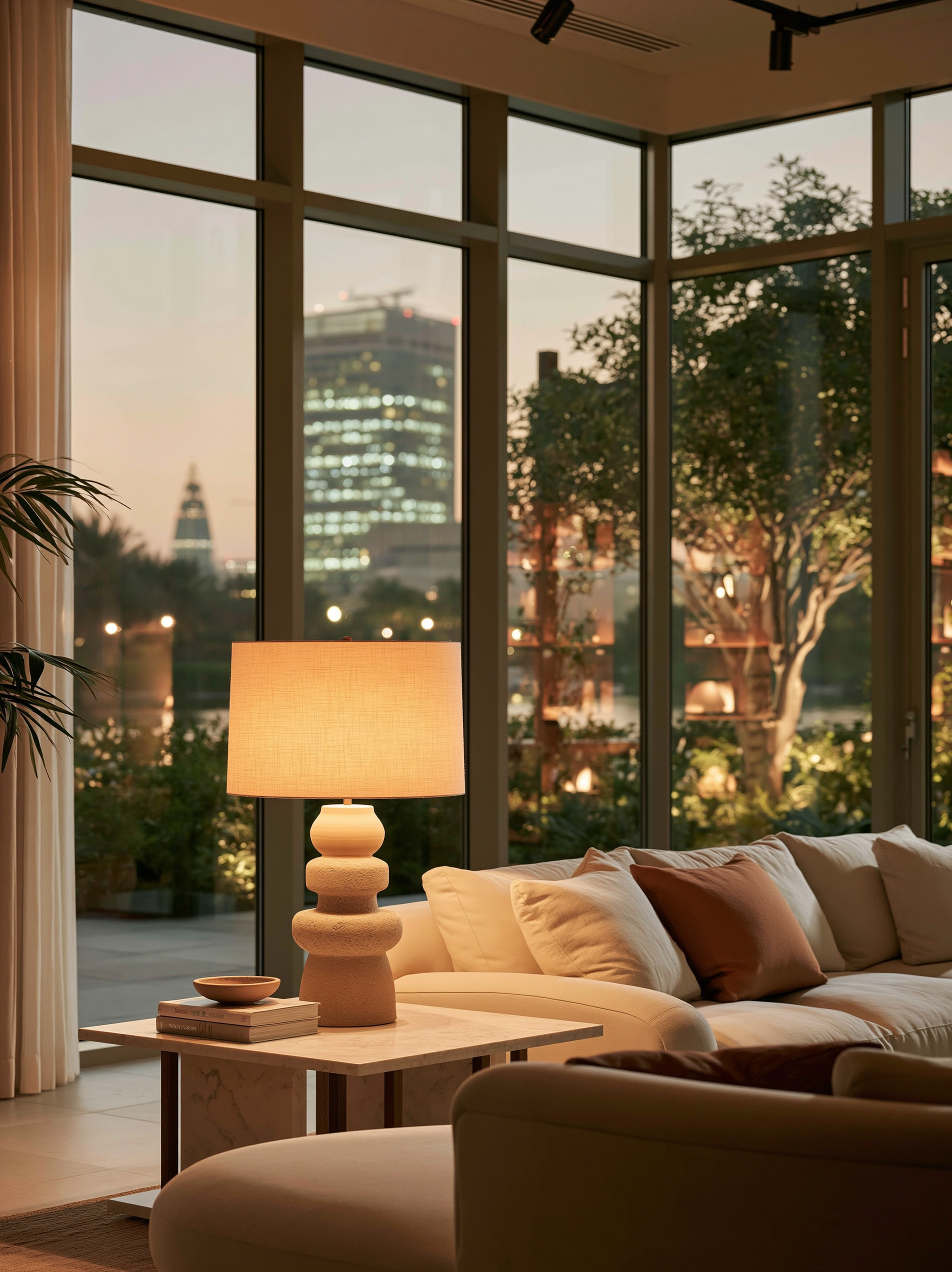
One lamp, one corner, overhead off. The room becomes something else entirely.
✦ Try this tonight: turn off every overhead light in your living room and use only lamps. Give it twenty minutes. Notice what the room becomes — and notice where it still falls flat. Those gaps are telling you exactly where to shop next.
A living room isn't finished when everything is in place. It's finished when you stop noticing what's missing.
The Art — One Piece That Takes a Position
Not a gallery wall. Not three coordinating prints. One piece — large enough to mean something, chosen because you actually respond to it — hung in the place that needs it most.
Art is the fastest way to give a room a point of view. It doesn't have to be expensive. A large-scale black and white photograph, a vintage exhibition poster from a gallery sale, an abstract canvas from an emerging artist — any of these will do more for a living room than a curated arrangement of small frames that play it safe.
Hang it lower than feels right. Most people hang art too high — eye level when standing, which means you never really see it when you're sitting on the sofa. Drop it so the centre of the piece sits roughly at seated eye level. Let there be space around it. Let it breathe.
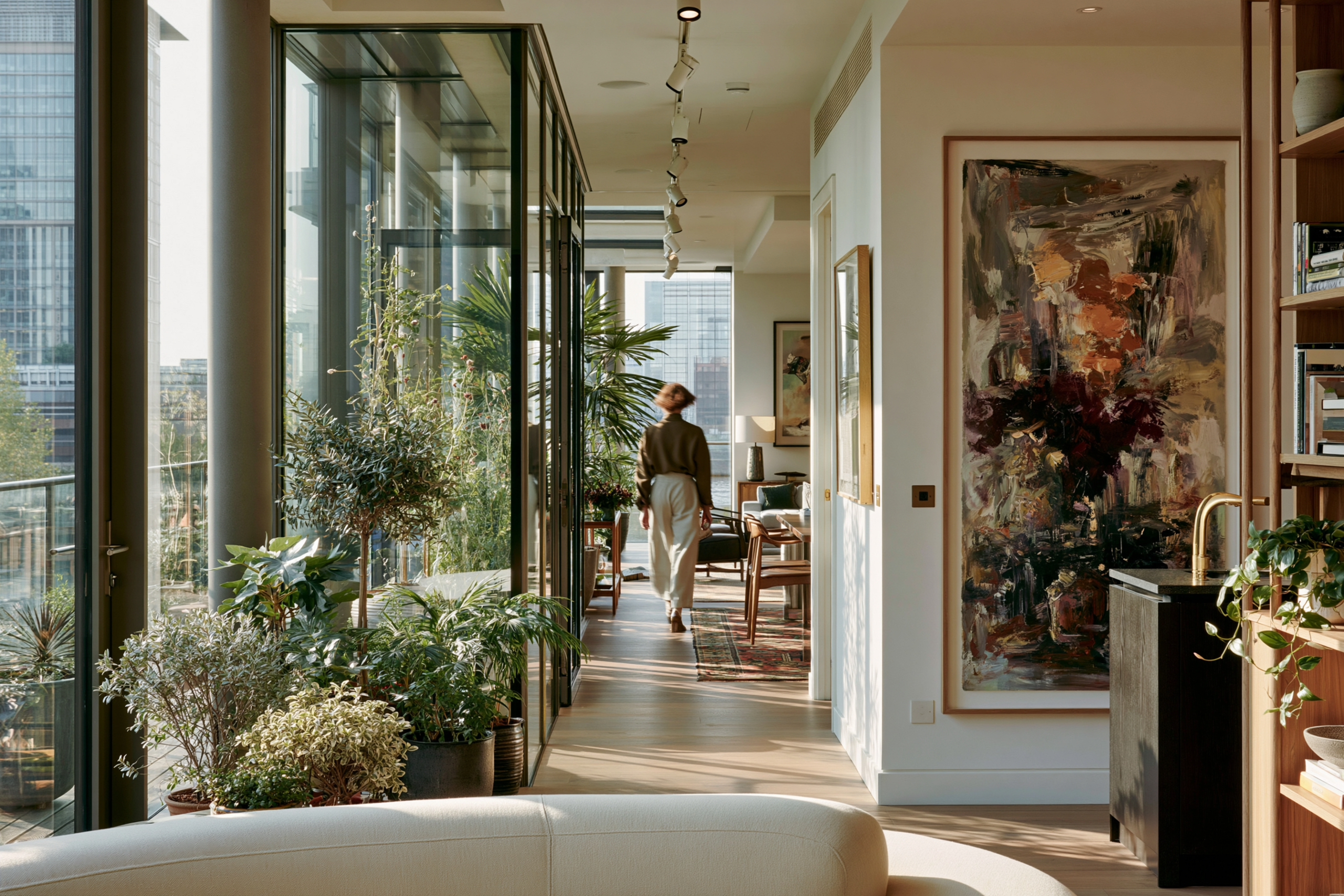
One piece, hung lower than feels comfortable. The space around it is part of the composition.
The Plant — Something with Scale
Not a collection of small succulents on a windowsill. One plant — large enough to occupy space in the room the way a piece of furniture does. A fiddle leaf fig. An olive tree. A large monstera. A snake plant that reaches the ceiling.
Plants do something no object can: they introduce organic form and movement into a room. The eye relaxes when it has something living to rest on. A large plant in a corner changes the scale of the entire space around it — suddenly the ceiling feels higher, the room feels more considered, the corner that was dead space becomes the most interesting part of the room.
The pot matters. A simple stone or terracotta pot, a woven basket, a clean ceramic in a warm neutral. The plant and its vessel should feel like they belong in the room, not like they arrived from the garden centre and haven't been introduced yet.
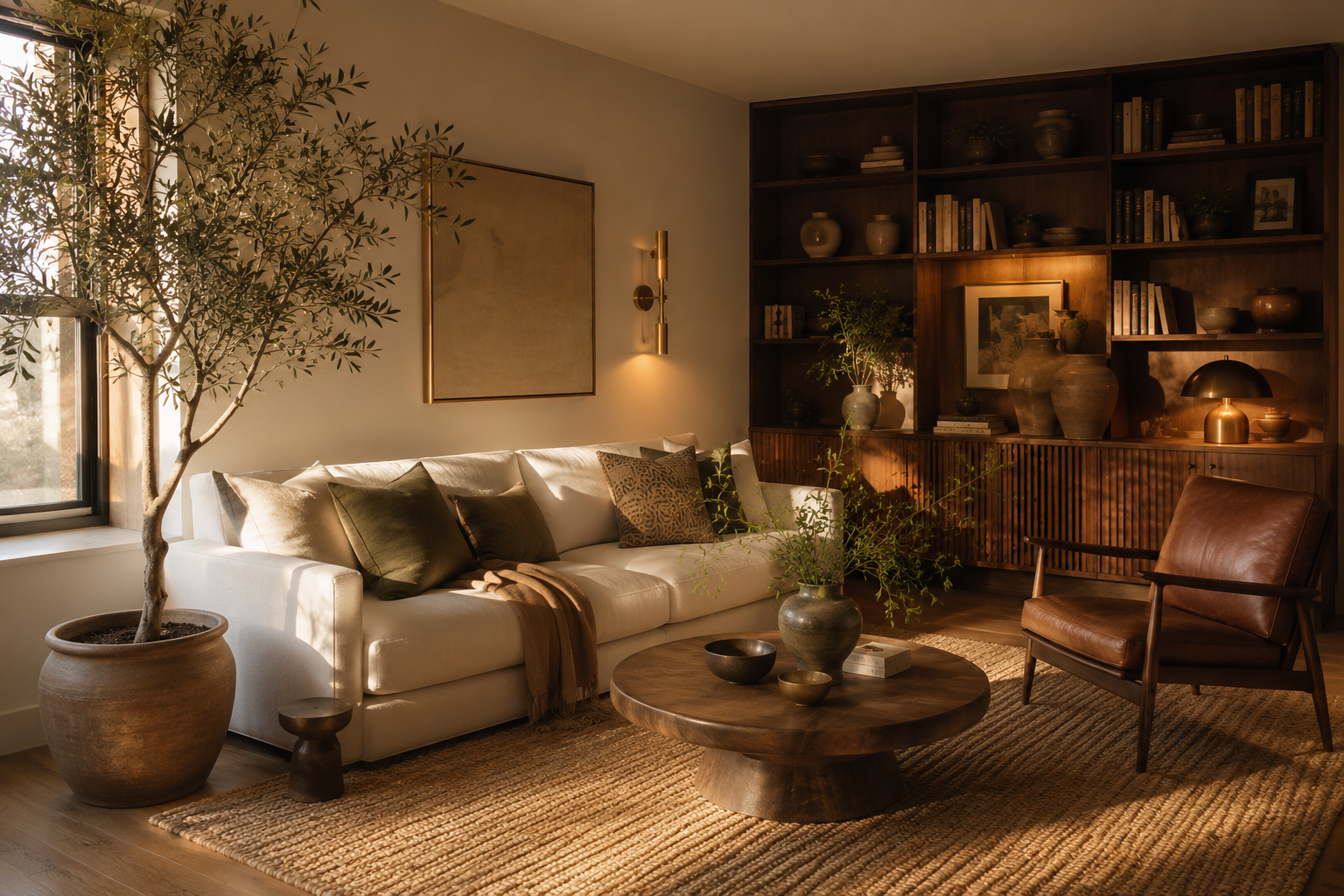
Scale and organic form. A large plant changes the room around it — the ceiling feels higher, the corner comes alive.
The Coffee Table — Styled, Not Decorated
The coffee table is the most visible surface in the living room and the one most people get wrong. Not because they don't style it, but because they style it too deliberately — a tray, a candle, three small objects that came as a set — and it reads as exactly that.
The goal is considered, not arranged. Two or three art or design books stacked horizontally. A single ceramic object on top of the stack. A small bowl that holds something — keys, a stone, a dried seed pod. A single stem in a narrow vase. A candle that's actually been burned.
Leave space. The empty surface around your objects is part of the composition. A coffee table that's too full reads as anxious. A coffee table with three right things and deliberate negative space reads as intentional.
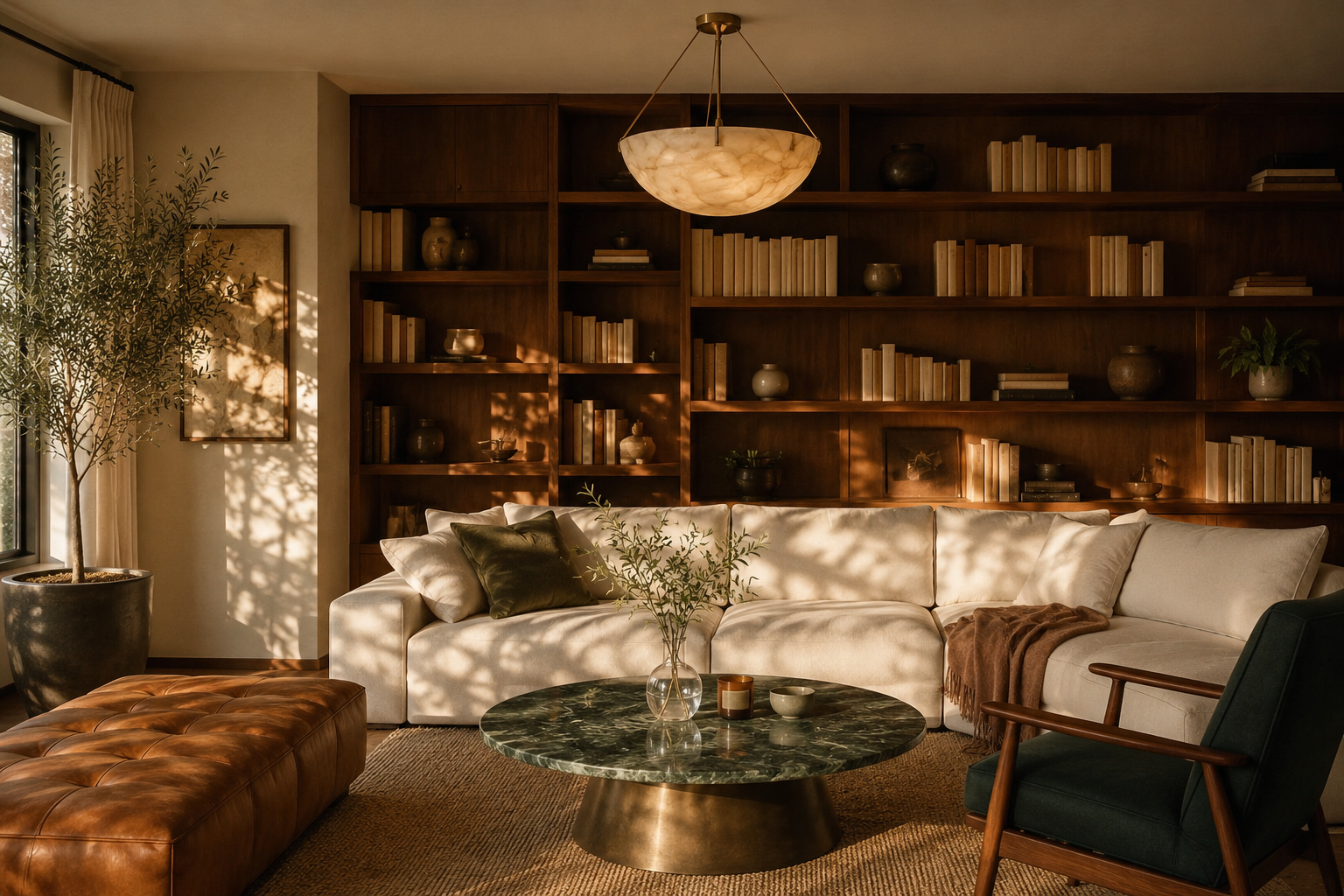
Three things, deliberately placed. The negative space is part of the composition.
✦ The edit test: if you removed one item from your coffee table and the table looked better, that item doesn't belong there. Keep removing until removing anything would make it worse. What's left is your composition.
Five decisions, made well, will do more for a living room than twenty decisions made in a hurry.
None of these five things require a renovation. None of them require a large budget. What they require is patience — the willingness to make one decision well before moving on to the next, and to resist the impulse to fill the room before you've understood what it needs.
A living room that feels right isn't the result of more. It's the result of better. Five things, chosen with intention, will always outperform twenty things chosen in haste.
Ready to build your living room with intention?
Browse our curated apartment concepts — four room identities, each built around the objects that actually change how a space feels.
Browse the concepts → More from the journal →